

|
Cultural attractions Historical attractions Monasteries, cathedralsKhor Virap Monastery Geghard Monastery Tatev Monastery Noravank Monastery Haghartsin Monastery Sevanavank Monastery Etchmiadzin Monastery Saint Gregory the Illuminator Cathedral Holy Saviour Church Saint Hripsime Church Saint Gayane Church Gndevank Monastery Ayravank Monastery Goshavank Monastery Makaravank Monastery Haghpat Monastery Sanahin Monastery Akhtala Fortress and Monastery Odzun Monastery Kecharis Monastery Hovhanavank Monastery Saghmosavank Monastery Architectural attractions Natural attractions Unusual attractions |
Khor Virap Monastery (Ararat) R4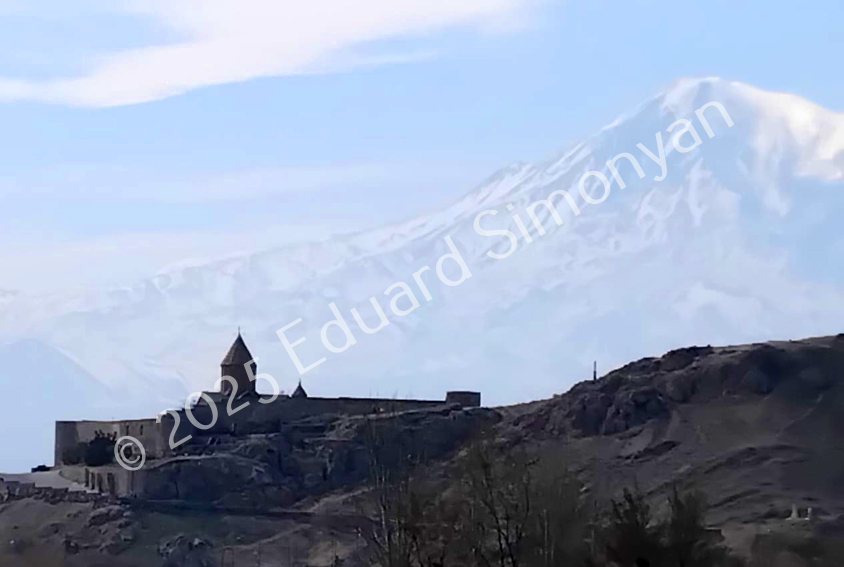
The best, magnificent, incredible view of the sacred Mount Ararat! Khor Virap Monastery is located 40 km from Yerevan, at the foot of Mount Ararat, near the Turkish border. The monastery was founded in the 7th century on the site of the ancient city of Artashat, the capital of the Armenian Kingdom under King Artashes I. The church is surrounded by fortress walls that have served as protection many times throughout history. In the monastery’s underground chamber, Saint Gregory the Illuminator spent 13 years imprisoned by order of King Trdat III. This place is open to visitors, and to reach the dungeon one must descend a vertical ladder through a narrow opening. Interestingly, the monastery has no source of drinking water - a rarity among Armenian monasteries. Along the road leading to Khor Virap, storks often nest on the poles. From the hill, there is a breathtaking view of the Ararat Valley. The monastery is also known as the place where Gregory the Illuminator - the founder of the Armenian Apostolic Church - was held captive for preaching Christianity. After miraculously healing King Trdat III from his illness, Gregory was released, baptized the king and the Armenian people, making Christianity the state religion. The first Church of Saint Gevorg was built in 642 and was rebuilt several times. The current monastery complex was completed in 1662. Situated on a hill with a view of Ararat and the surrounding pastures, Khor Virap is a picturesque and historically significant site. >>>>>>>>>>>>>>>>>>>>>>>>>>>>>>>>>>>>>>>>>>>>>>>>>>>>> Book a tour to Khor Virap Monastery Geghard Monastery (Kotayk) R1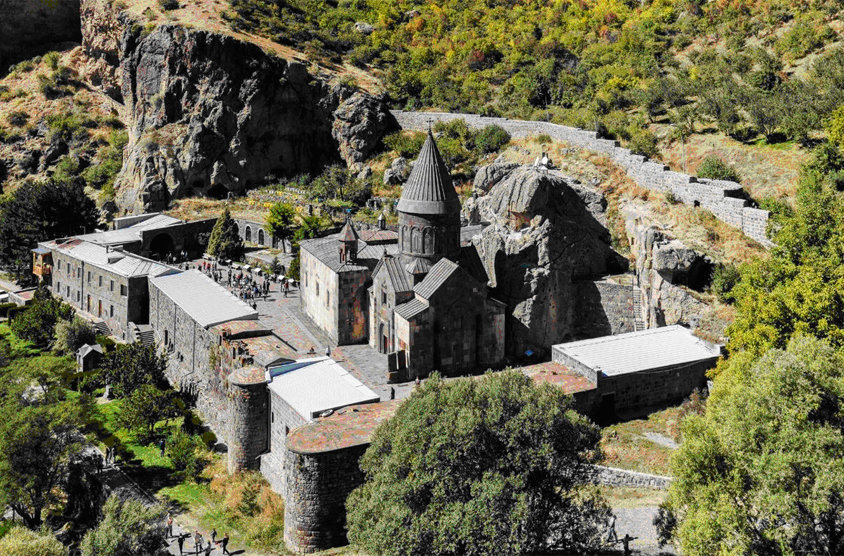
Geghard Monastery is a unique monument of architecture and culture located about 40 km from Yerevan. According to tradition, it was founded by Gregory the Illuminator and named after the spear of the Roman soldier Longinus, who pierced the body of Jesus Christ on the cross. “Geghard” translates from Armenian as “spear.” The monastery is partially carved into the rock and hidden in a gorge surrounded by high mountains. Sunlight enters through an opening in the dome, creating a special and mystical atmosphere. There is also an acoustic chamber that enhances sound, attracting singers and music enthusiasts. Entrance to the monastery is free, and the site offers parking, a water spring, and restrooms. Legend says that the monastery was founded around a holy spring, making it nearly 1,700 years old. Despite multiple destructions over the c enturies, several ancient structures have survived, while the main architectural complex took shape in the 13th century. The main church, Katoghike, is decorated with ancient inscriptions, and the monastery once housed many Christian relics, including the Spear of Longinus, which remained here for a long time but is now kept in the Etchmiadzin Cathedral. Geghard Monastery (also called Geghardavank, meaning “Monastery of the Spear”) is located only 10 km from the village of Garni, in the gorge of the Goght River. According to legend, the spear was brought here by the Apostle Thaddeus. The complex was founded in the 4th century, but was destroyed by the Arabs in the 9th century. It suffered several more destructions in later periods, and its current appearance dates back primarily to the 13th century. Many of its churches are carved directly into the rock, often interconnected with exterior structures. The complex includes several buildings: • Katoghike - the main church, situated opposite the mountain. • Gavit - a 13th-century narthex attached to the church. • The rock-cut church with a spring, carved in 1240. • Jhamatun - a burial vault, the second cave church dedicated to the Holy Mother of God. • Another rock-cut church, built in 1283 with the support of Prince Prosh. • The upper jhamatun, built in 1288, located on the second level above the tomb. • The Chapel of Saint Gregory, carved in 1177. Geghard Monastery is inscribed on the UNESCO World Heritage List. >>>>>>>>>>>>>>>>>>>>>>>>>>>>>>>>>>>>>>>>>>>>>>>>>>>>> Book a tour to Geghard Monastery Tatev Monastery (Syunik) R5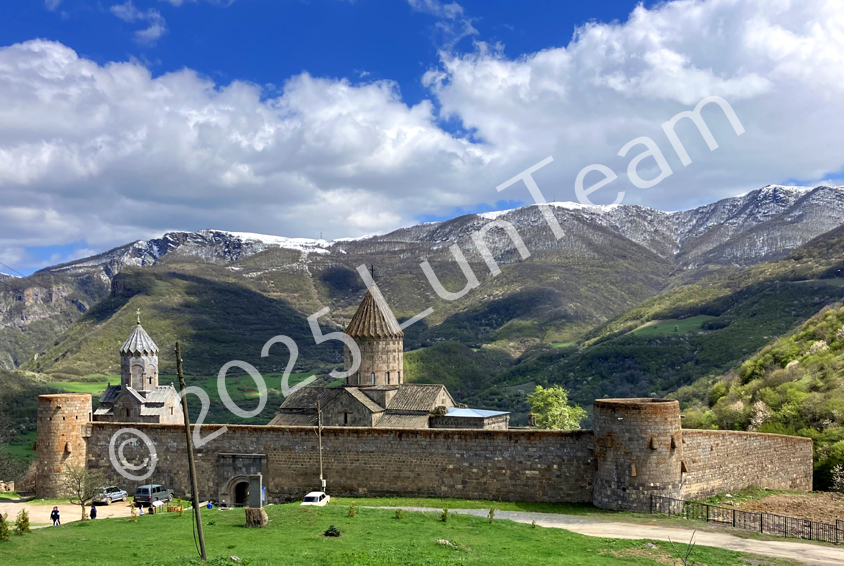
Tatev is a true jewel of medieval Armenian architecture and one of the oldest and most famous monasteries in the country, located 20 km from the town of Goris. The monastic complex was built between the 9th and 13th centuries in a remote, mountainous area surrounded by scenic forests and cliffs. It can be reached either by car or by the cable car, which is considered the longest reversible aerial tramway in the world. On the monastery grounds there is a drinking water spring, and the restroom operates with a single 200-dram coin. As you approach the upper station, a panoramic view opens over the highland Tatev Monastery. The monastery existed even before the Christianization of Rus’ and served as an important center of education and scholarship. By the 10th century, more than a thousand people lived here, and taxes were collected from several hundred surrounding villages. Tatev miraculously survived the invasions of Tamerlane but was burned by the army of his successor, Shahrukh. Despite the destruction, Tatev was later restored and continued to function as a major feudal, spiritual, and academic center. The “Tatev” station is a convenient starting point for exploring the monastery. Several historical monuments have been preserved here, including the Church of Surb Poghos-Petros, built between 895 and 906, which houses the tomb of Saint Grigor Tatevatsi - the last canonized saint of the Armenian Apostolic Church. Other important structures include the Church of Saint Gregory the Illuminator (1295) and the Church of the Holy Mother of God, built at the end of the 11th century. Special attention should be given to the Gavazan pillar, erected in 904 and topped with a khachkar. This unique pillar sways even with slight seismic activity, serving as an early-warning mechanism for the monks. Gavazan is also considered a celestial compass, aligned with the constellation Hayk-Orion. Another notable feature is the 17th-century oil press with its massive millstone used for oil production. Entrance to the monastery is free and open to all visitors. >>>>>>>>>>>>>>>>>>>>>>>>>>>>>>>>>>>>>>>>>>>>>>>>>>>>> Book a tour to Tatev Monastery Noravank Monastery (Vayots Dzor) R4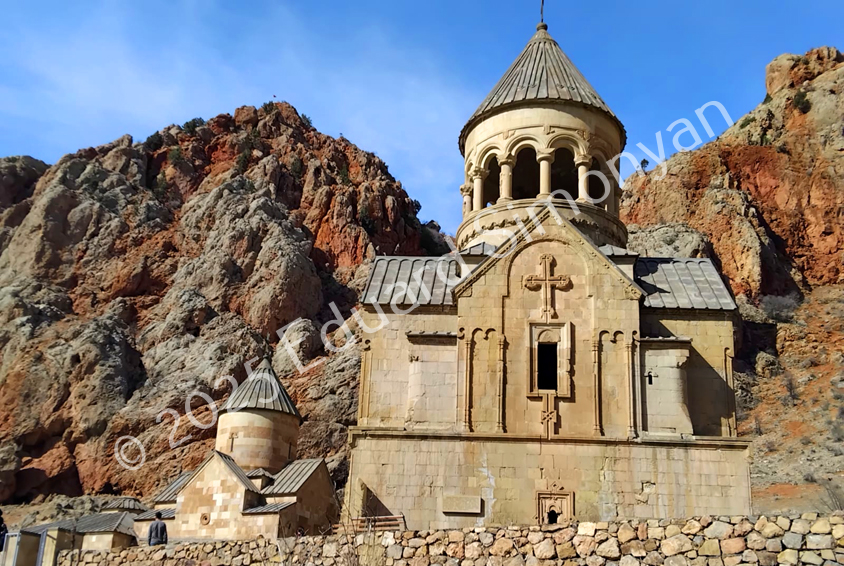
The road leading to the Noravank Monastery is considered one of the most beautiful in Armenia. The views on the way to Noravank are truly breathtaking - the eight kilometers from the main highway to the monastery are pure aesthetic delight. Armenian monks are known for choosing the most picturesque locations for their monasteries, and Noravank is no exception. The monastery is situated in a stunning canyon surrounded by red vertical cliffs. It consists of two main churches: Surb Karapet and Surb Astvatsatsin, the latter being especially striking thanks to its unique architecture, including intricate decorative elements on the dome. Surb Astvatsatsin is the final masterpiece of the great architect Momik, whose works adorn many Armenian regions. Noravank Monastery was founded in the 12th century. On its territory stands the Church of the Holy Mother of God (Surb Astvatsatsin), designed by Momik. A tragic legend is associated with his name: he fell in love with the daughter of the Syunik prince, who demanded that Momik build a grand church within a short time. Momik fulfilled the task, completing the church in just three years. However, by the prince’s order, he was thrown from the dome. It is said that the architect had carved his own khachkar in advance, which became his memorial. The monastery is located 10 km from the Areni Cave and the local winery. Noravank is regarded as one of the most important monuments of Armenian religious architecture. Tourists are drawn to its 13th-century churches, which look especially picturesque against the backdrop of the red cliffs of the Arpa River Gorge. The complex includes several unique structures: • The Chapel of Saint Gregory (1300), which contains a tombstone depicting a half-man, half-lion figure and numerous khachkars with blue eight-pointed stars. • The Church of Saint John the Baptist, home to the tomb of Prince Orbelian, decorated with an image of the Holy Mother and God the Father. • The Church of the Holy Mother of God, the most magnificent structure in the complex, with a beautiful conical dome and reliefs depicting the Virgin and Child, as well as the apostles Peter and Paul. Founded in 1205, Noravank continues to captivate visitors with its rich history and spectacular scenery. >>>>>>>>>>>>>>>>>>>>>>>>>>>>>>>>>>>>>>>>>>>>>>>>>>>>> Book a tour to Noravank Monastery Haghartsin Monastery (Tavush) R3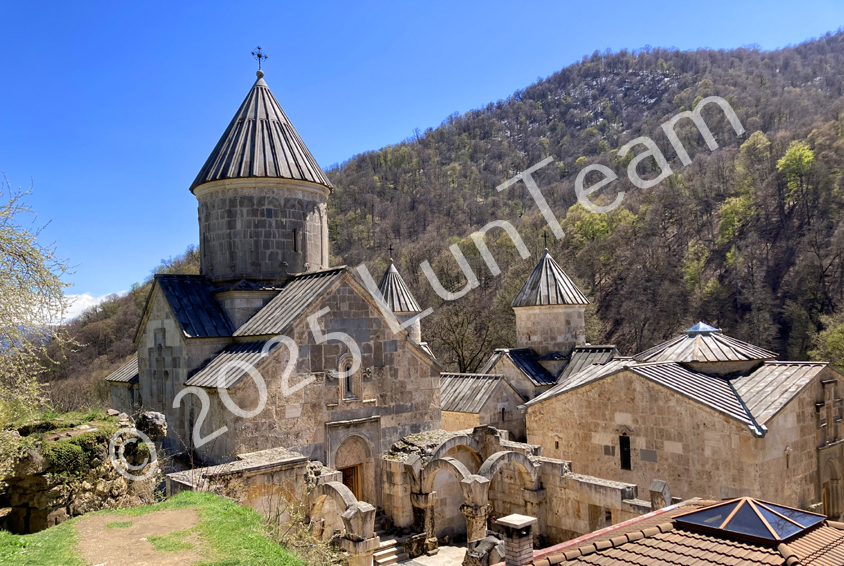
Haghartsin Monastery was built between the 11th and 13th centuries. According to historical sources, the Church of the Holy Mother of God (Surb Astvatsatsin) was erected in 1071 (or, according to other data, in 1281), while the remaining structures were added later and underwent multiple reconstructions. Entrance is free, and the site offers restrooms and a drinking water spring. Visitors can also buy honey here, as there is a nearby apiary. Haghartsin is a popular tourist destination, so it is best to arrive early - the monastery opens at 9:00. Parking is small but free, and the road leading to the complex is in good condition. The history of Haghartsin begins in the 11th century with the construction of the Church of Surb Grigor, which has survived to this day. In the 13th century, after a period of decline caused by destruction inflicted by the Turks, the complex was expanded with the addition of the churches of Surb Stepanos and Surb Astvatsatsin. The main difference between these two churches is their size, with Surb Astvatsatsin being significantly larger. During this period, the monastery became an important spiritual center and also served as the residence of the Bagratuni princes who ruled the region. Every stone of Haghartsin holds a fragment of Armenian history. The monastery is located 18 km from Dilijan, south of Goshavank, within the Dilijan National Park. Hidden deep within dense beech forests in the northeastern mountains of Armenia, Haghartsin has preserved most of its 13th-century structures. The name of the monastery comes from the Haghartsin River that flows nearby. Beginning in the late 12th century, the monastery became a major spiritual center of Eastern Armenia, actively contributing to the independence of the Armenian Church. It housed a school that taught both religious and secular subjects. The monastery’s abbot, musician, and theologian Khachatur Taronatsi made a notable contribution to the development of Armenian music. The oldest structure in the complex is the Church of Saint Grigor, built in the 11th century by monks fleeing Western Armenia due to persecution by Byzantium. It is a rectangular building with a conical dome placed on an octagonal drum. At the end of the 12th century, additional structures were added to the church, including a small chapel made of blue basalt. Near the refectory lie the ruins of the monastery kitchen, and along the southern wall of the church’s narthex are the remains of the tombs of two kings from the Kyurikid dynasty. The monastery is open year-round, fully restored, equipped with modern facilities, and has an excellent access road. >>>>>>>>>>>>>>>>>>>>>>>>>>>>>>>>>>>>>>>>>>>>>>>>>>>>> Book a tour to Haghartsin Monastery Sevanavank Monastery (Gegharkunik) R3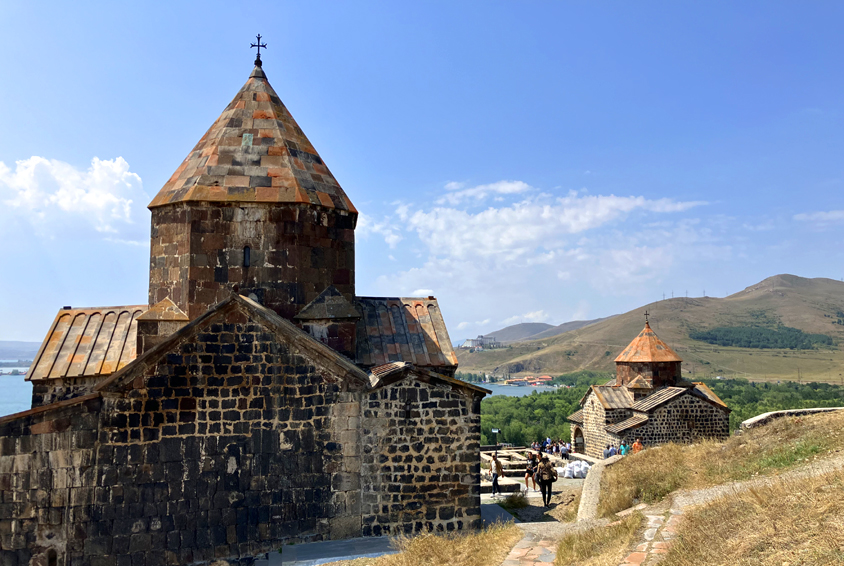
Sevanavank, located on Lake Sevan, is one of Armenia’s most popular tourist attractions. The monastery stands atop a hill, and the ascent involves many steps, which can be challenging for elderly visitors or those with strollers. However, the panoramic view of the lake from the top is truly breathtaking. Along the path leading to the monastery, you’ll find numerous souvenir stands, and at the bottom, by the lakeshore, there are cafés and free parking. The monastery sits at an elevation of about 1,900 meters above sea level, and the temperature noticeably drops as you approach it. Even in summer, it is wise to bring warm clothing, as the air can be quite cool. Be mindful of the strong sun as well - sunscreen is highly recommended. Sevanavank is located on a peninsula of Lake Sevan and is easily accessible via the circular road around the lake. Free parking is available at the foot of the hill, from where visitors can climb the stone steps to the monastery. Sevanavank was founded in 874 by Mariam, daughter of an Armenian king. It was originally built on an island, but as water levels receded over time, the island became a peninsula. The monastery originally included the Church of the Holy Mother of God and the Church of the Ascension. King Ashot II once lived here while defending Armenia from Arab invaders. In the 16th–17th centuries, the monastery was destroyed, and the last monks left in 1930. After Armenia regained independence in 1990, restoration works began, during which the churches of Saint Karapet and Saint Arakelots were rebuilt. Today, Sevanavank attracts visitors not only with its rich history but also with the stunning views of Lake Sevan from the hilltop and the excellent photo opportunities from the viewing platform. >>>>>>>>>>>>>>>>>>>>>>>>>>>>>>>>>>>>>>>>>>>>>>>>>>>>> Book a tour to Sevanavank Monastery Etchmiadzin Monastery (Vagharshapat, Armavir) R2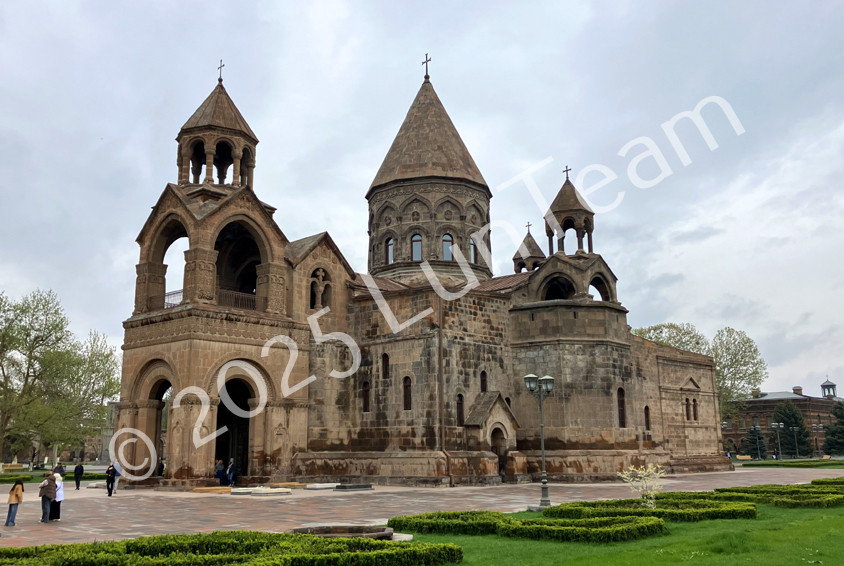
The Etchmiadzin Monastery, founded in the 4th century, is located in the city of Vagharshapat in the Armavir Province and is considered the spiritual and administrative center of the Armenian Apostolic Church. From 303 to 484 it served as the residence of the Catholicos of All Armenians, and after nearly a thousand-year break, it regained this status in 1441, which it retains to this day. This is where the throne of the Supreme Patriarch and Catholicos of All Armenians is located. The Etchmiadzin Cathedral is the architectural centerpiece of the monastic complex and the main church of the Armenian Apostolic Church. Its wooden version was built in 303 by the order of Gregory the Illuminator, the first Catholicos of Armenia, on the site of a former pagan temple, symbolizing the nation’s conversion to Christianity. Later, in the 7th century, the church was rebuilt in stone, and its final architectural form was achieved only by the 19th century after numerous renovations. According to tradition, God Himself indicated the place for the future church, descending from heaven and striking the ground with a golden hammer. This vision, recorded by the historian Agathangelos, gave the cathedral its name - “Etchmiadzin,” which in Armenian means “The Descent of the Only-Begotten.” The cathedral is recognized as one of the oldest Christian temples in the world and has been a UNESCO World Heritage Site since 2000. The engineering features of the building are remarkable: the cathedral’s foundation was designed with seismic activity in mind. The stones are laid in such a way that during earthquakes the structure does not collapse but gently sways. Beneath the cathedral lies a spring feeding an internal 7-meter-deep well, whose water level remains constant throughout the year. Within the monastery grounds are the residence of the Catholicos, administrative buildings, residential quarters, and a treasury that houses rare Christian relics. The complex also includes a 19th-century theological seminary - the largest higher educational institution of the Armenian Apostolic Church, where future clergymen study and live. Special attention should be paid to the khachkars - traditional Armenian stone steles carved with crosses - found throughout the complex. Entering through the Gates of King Trdat the Great and Gregory the Illuminator, visitors will notice an open-air altar located to the right of the arch. Among the significant architectural landmarks is the Church of the Holy Archangels, a tower-like structure topped with a dome and cross. Its upper-level window openings are decorated with intricate carved patterns shaped like stylized crosses. Also notable are the ancient monastic printing house founded in 1772 and the monks’ residence, clad in contrasting shades of tuff stone. The entire architectural ensemble of Etchmiadzin is recognized as a UNESCO World Heritage Site. >>>>>>>>>>>>>>>>>>>>>>>>>>>>>>>>>>>>>>>>>>>>>>>>>>>>>>>> Book a tour to Etchmiadzin Monastery Saint Gregory the Illuminator Cathedral (Yerevan) R2Ye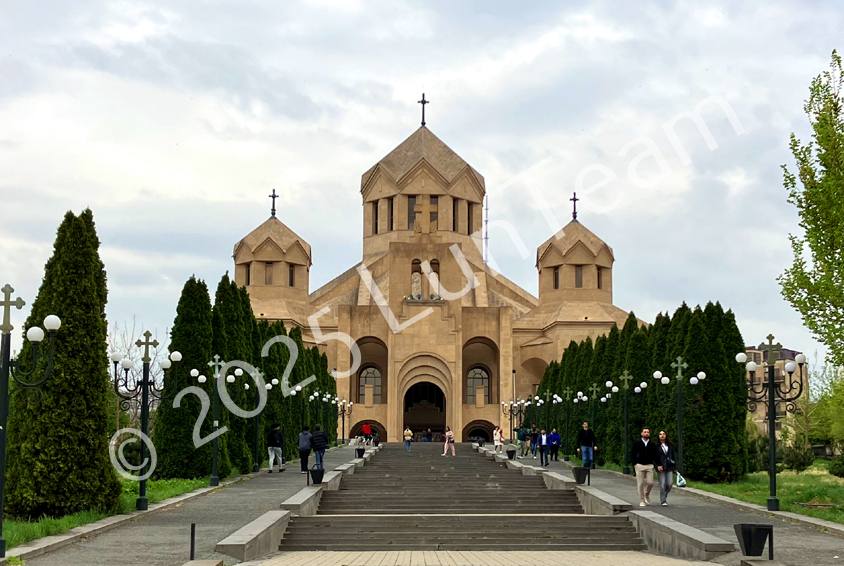
St. Gregory the Illuminator Cathedral was built in 2001 to commemorate the 1700th anniversary of the adoption of Christianity in Armenia - the first country in the world to make Christianity a state religion. This historic event took place in 301 AD, and Saint Gregory the Illuminator played the key role in converting Armenia to Christianity. The cathedral complex consists of three churches constructed in the traditions of Armenian architecture. One is dedicated to Gregory the Illuminator, while the other two honor King Trdat III and Queen Ashkhen, who supported Gregory in spreading Christianity throughout the country. The construction of the cathedral was a major event, and its interior was completed with exceptional care, making it one of the most beautiful churches in Armenia. St. Gregory the Illuminator Cathedral is the largest church in Yerevan and the second largest in the South Caucasus. Built in honor of the 1700th anniversary of Armenia’s conversion to Christianity, it was completed in 2001. The cathedral can accommodate up to 1,700 people. Holy Saviour Church (Gyumri, Shirak) R8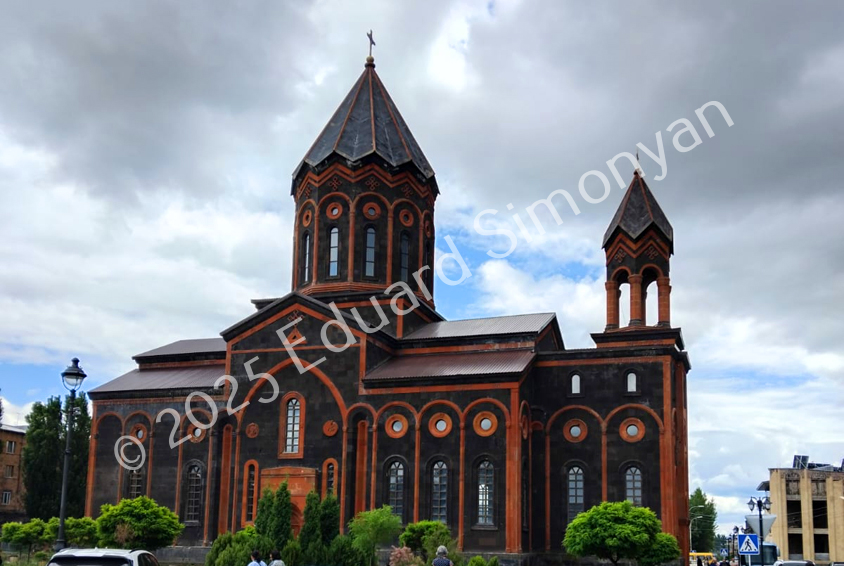
In the mid-19th century, a small church in Gyumri (then Alexandropol) could no longer accommodate all of its parishioners, and the townspeople petitioned for the construction of a larger one. The authorities supported the initiative, and the project was funded by local residents and philanthropists. The new All Saviour’s Church (Holy Saviour Church) was built on marshy soil to reduce the risk of destruction during earthquakes. This precaution proved effective during the tremors of 1926, but the Spitak earthquake of 1988 almost completely destroyed the church. Due to financial difficulties, restoration was delayed, but in 2002 a large-scale reconstruction effort began, which was completed 12 years later. The church’s architecture follows traditional Armenian design principles, while its unusual color palette makes the building particularly striking and recognizable. >>>>>>>>>>>>>>>>>>>>>>>>>>>>>>>>>>>>>>>>>>>>>>>>>>>>> Book a Tour in Gyumri Saint Hripsime Church (Vagharshapat, Armavir) R2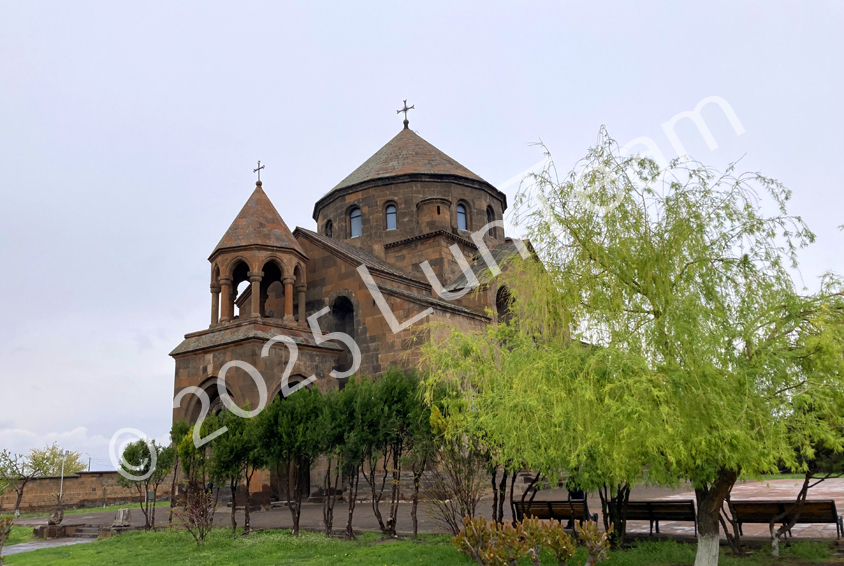
Before the 4th century, the site was occupied by a temple in the ancient Greek style, dedicated to one of the pagan goddesses worshipped by the Armenians. Its destiny changed after the arrival in Armenia of Hripsime and her companions - Christian women fleeing persecution by the Roman Emperor Diocletian. Hripsime’s beauty captivated the Armenian king Trdat III, who wished to take her as his wife, but she refused, having devoted herself to Christ. Enraged by the rejection, the king ordered the execution of all the fugitives. After this, Trdat III fell into madness, and only the prayers of Gregory the Illuminator healed him. Realizing the gravity of his deeds, the king accepted Christianity and proclaimed it the state religion. In memory of Hripsime and her companions, a chapel was built on the site of their martyrdom, though it was later destroyed by the Persians. The present Church of Saint Hripsime, located near the Zvartnots temple in Vagharshapat, was constructed in the 7th century. Over the centuries, the building underwent several reconstructions, and in 1653, by the order of Catholicos Philippus, it was thoroughly restored, acquiring the appearance we see today. >>>>>>>>>>>>>>>>>>>>>>>>>>>>>>>>>>>>>>>>>>>>>>>>>>>>>>>> Book a tour to Saint Hripsime Church Saint Gayane Church (Vagharshapat, Armavir) R2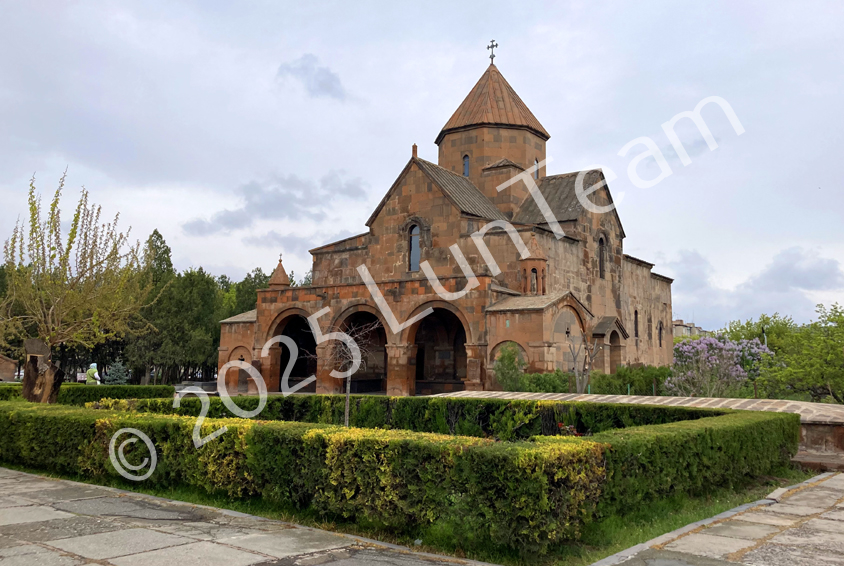
Abbess Gayane arrived in Armenia together with Ripmsime and was martyred for her faith. Unlike Ripsime, her memory was honored more than 300 years later - in 630 AD, when Catholicos Ezra ordered a church to be built on the site of her martyrdom. The Church of Saint Gayane has been preserved almost in its original form, except for the dome, which was reconstructed in the 17th century. On its grounds lies a small necropolis where prominent figures of the Armenian clergy are buried. >>>>>>>>>>>>>>>>>>>>>>>>>>>>>>>>>>>>>>>>>>>>>>>>>>>>>>>> Book a tour to Saint Gayane Church Gndevank Monastery (Vayots Dzor) CR2Gndevank, like many monasteries of its time, was an important cultural and educational center of Armenia. It was built in the first half of the 10th century by order of Princess Sophia of Syunik. Throughout its history, the monastery experienced periods of flourishing, decline, and destruction, but each time it was restored, allowing it to survive to the present day. Ayravank Monastery (Ayravank village, Gegharkunik) R4On the western shore of Lake Sevan, on an elevated promontory, stands the monastic complex of Ayravank, founded in the 9th century. It consists of a church, a chapel, and a gavit, which were expanded and rebuilt over the centuries. The monastery remained abandoned for a long time, and only in the 1980s was monastic life revived here. Ayravank is characterized by the austere architecture typical of early Armenian ecclesiastical design. The interior has no elaborate decorations, and the narrow windows create a distinctive lighting effect. Numerous khachkars and gravestones are scattered around the monastery, and archaeological findings testify to the site’s rich historical past. The main structure of the complex is the Church of Saint Stepanos, built at the beginning of the 9th century from roughly hewn black limestone. A chapel and a gavit were added later. A restored stone staircase leads to the church, lined with khachkars on both sides. Ayravank is associated with a legend about Abbot Hovhan, who, in order to save Armenians seeking refuge in the monastery from the army of Tamerlane, miraculously turned them into doves by the will of God and let them escape through the church windows. Goshavank Monastery (Gosh Village, Tavush) R3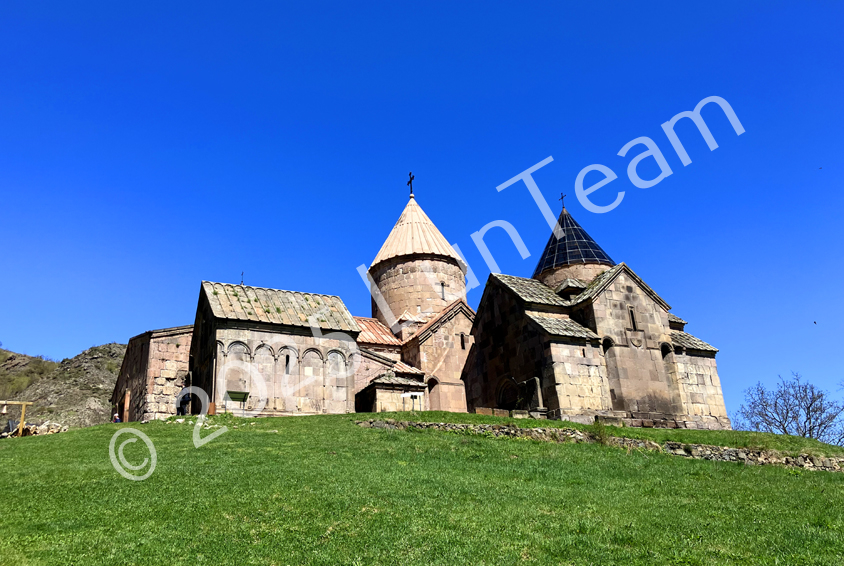
After the devastating earthquake, the Getik Monastery was completely destroyed, but soon Goshavank rose in its place. Founded in the late 12th century by the prominent thinker and theologian Mkhitar Gosh, it became one of the largest cultural and educational centers of medieval Armenia. Here, students studied history, law, philosophy, as well as poetry, painting, music, and calligraphy. Among its notable pupils were the historians Vanakan Vardapet and Kirakos Gandzaketsi. Goshavank is a monastery complex that includes the Church of Astvatsatsin (1196), the gavit (1203), the Church of St. Gregory (1241), the Lusavorich Chapel (1241), and the manuscript library (1231). You can also see the rotunda-style bell tower, khachkars, and the ruins of Mkhitar Gosh’s tomb. A special treasure of the monastery is the ‘Aseghnaghogh’ khachkar, renowned for its incredibly delicate, needle-like carving. The monastery stands on a picturesque hill overlooking the mountains of the Tavush region. Nearby is Lake Gosh, surrounded by dense forests. The area is especially beautiful in autumn, when golden foliage is reflected in the water. However, reaching the lake requires either a hike or a 4×4 vehicle due to the difficult road. >>>>>>>>>>>>>>>>>>>>>>>>>>>>>>>>>>>>>>>>>>>>>>>>>>>>> Book a tour to Goshavank Monastery Makaravank Monastery (Tavush) R7Makaravank is a vivid example of harmonious integration between architecture and the natural landscape. The monastery complex stands out for its elegant sculptural decorations and reliefs, and it blends so naturally with its surroundings that it seems as though it has stood here since time immemorial. In reality, the monastery was founded in the 12th century, although one of its churches is two centuries older than the complex itself. Even the “newest” structures - such as the bakery and the narthex - date back to the 13th century. Despite earthquakes, natural disasters, and wars, Makaravank has survived almost unchanged. Haghpat Monastery (Lori) R7For a thousand years - with only brief interruptions - monastic life has continued at the Haghpat Monastery in the Lori region. In the Middle Ages, it was a renowned educational center where grammar, philosophy, music, and theology were studied. The monastery enjoyed the patronage of Armenian princes who generously supported its development. Among them, the Kyurikid dynasty stood out in particular, having transferred their family mausoleum here in the 12th century. The ancient stone walls, covered with moss, and the grass sprouting through the slate roofs preserve the memory of centuries of history, significant events, and the people who left their mark on the fate of Haghpat. >>>>>>>>>>>>>>>>>>>>>>>>>>>>>>>>>>>>>>>>>>>>>>>>>>>>>>>> Book a tour to Haghpat Monastery Sanahin Monastery (Sanahin Village, Lori) R7In the Middle Ages, Sanahin Monastery was one of the largest educational centers in Northern Armenia. It housed a scriptorium, a library, and an academy, and at its peak had more than 500 monks. The monastery owned vast lands, which enabled it to support the development of science and the arts, including the time-consuming process of manuscript writing in the era before printing. Sanahin was built nearly simultaneously with Haghpat, located 15 km away. According to legend, it was founded on the site where Gregory the Illuminator erected a cross in the 4th century. The name “Sa-na-in” is said to mean “This one is older than the other.” Today, Sanahin is partly in ruins and requires major restoration, which is planned to begin soon. Both monasteries have witnessed numerous historical events and were at various times supported by Armenian princes. Their cultural and architectural significance has been recognized internationally: Haghpat was inscribed on the UNESCO World Heritage List in 1996, followed by Sanahin in 2000. >>>>>>>>>>>>>>>>>>>>>>>>>>>>>>>>>>>>>>>>>>>>>>>>>>>>>>>> Book a tour to Sanahin Monastery Akhtala Fortress and Monastery (Lori) R7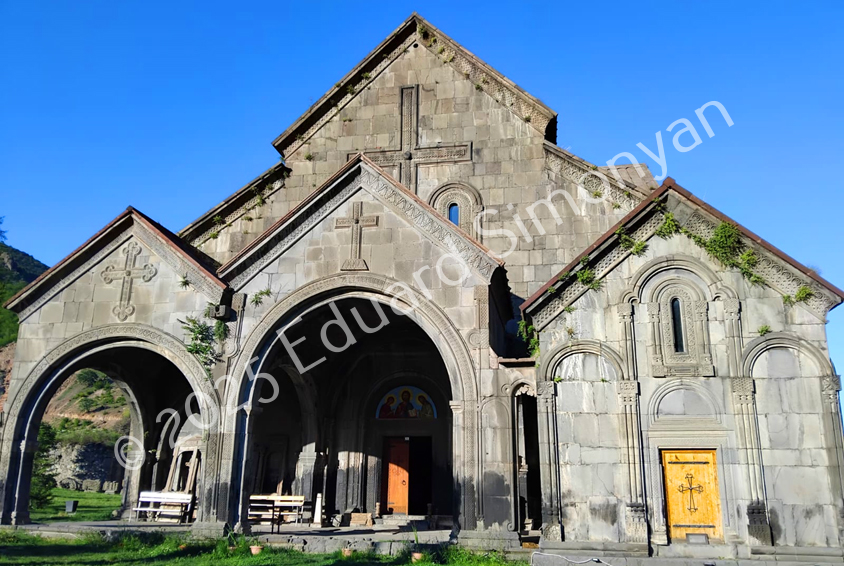
Akhtala Monastery, located in the Lori region, was founded by Princess Miriam, the daughter of King Gurgen II. Like many monasteries in Armenia, it was established by a woman, as during times of constant warfare the responsibility for the spiritual life of the people often fell to the wives and daughters of warriors. Later, a fortress wall was built around the monastery, as it was situated in a strategically important border area. Historically, Akhtala belonged to Georgia, and for a long time the monastery was administered by Georgian monks. However, despite cultural differences, it successfully maintained a balance between Armenian and Georgian traditions. Only after the collapse of the Soviet Union did the monastery fully return to the Armenian Apostolic Church. Akhtala is famous for its frescoes, which—according to legend—the monks once covered with lime because they believed the vivid colors distracted worshippers. Archaeologist Jacques de Morgan discovered unique 17th-century tombs here, where the deceased were buried in a seated position. The architectural complex of Akhtala combines Armenian, Georgian, and Byzantine elements, reflecting the close cultural ties of the region during the flourishing of the Armenian Kingdom. The beauty of the monastery and its surrounding landscapes attracted not only pilgrims but also filmmakers - Sergei Parajanov shot scenes of The Color of Pomegranates here. >>>>>>>>>>>>>>>>>>>>>>>>>>>>>>>>>>>>>>>>>>>>>>>>>>>>>>>> Book a tour to Akhtala Fortress and Monastery Odzun Monastery (Odzun Village, Lori) R7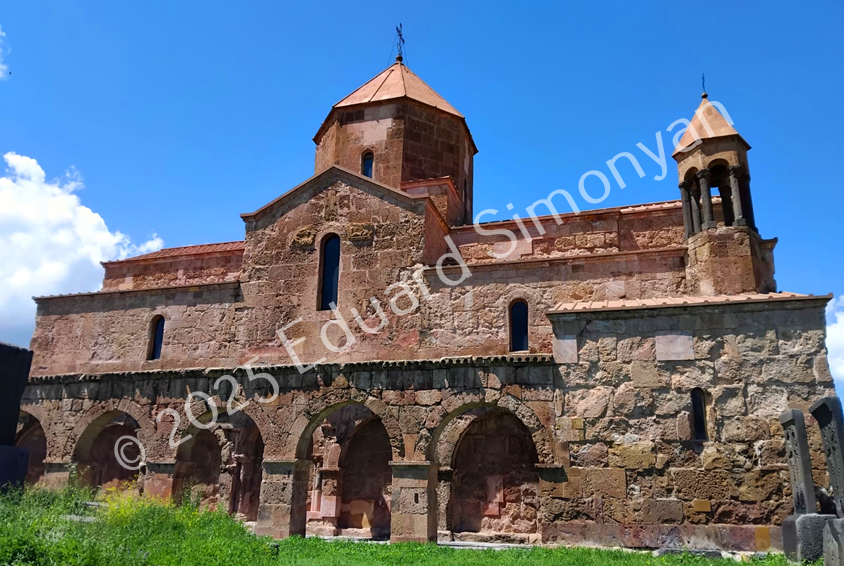
The exact founding date of the Odzun Monastery is unknown, but an analysis of the architectural elements and interior design of the main church suggests that it was built in the mid-6th century. Over time, the church underwent significant changes, acquiring new annexes and undergoing multiple restorations. The most recent major reconstruction, carried out by Italian specialists in 2014, saved the monastery from collapse. By that time, its foundation had been penetrated by tree roots, the walls were covered with cracks, and parts of the lime mortar had washed away. Thanks to timely restoration work, the monastery has been preserved and is now expected to stand for many more years despite the seismic activity of the region. >>>>>>>>>>>>>>>>>>>>>>>>>>>>>>>>>>>>>>>>>>>>>>>>>>>>>>>> Book a tour to Odzun Monastery Kecharis Monastery (Tsaghkadzor, Kotayk)Kecharis Monastery was founded by the princes of the Pahlavuni dynasty. Its construction began in 1031 at the initiative of Prince Apirat, who erected the main church. Over time, the complex expanded to include three additional churches, two chapels, a gavit, and a cemetery where prominent figures of the 11th–13th centuries are buried, including Prince Grigor Apiratyan, architect Vetsik, and Prince Prosh. Kecharis served as the residence of the archbishop for many years. Numerous inscriptions on the walls testify to the generous donations the monastery received. Thanks to this financial support, the architectural ensemble of the monastery became particularly diverse and has been well preserved to this day. Hovhanavank Monastery (Ohanavan village, Aragatsotn) R6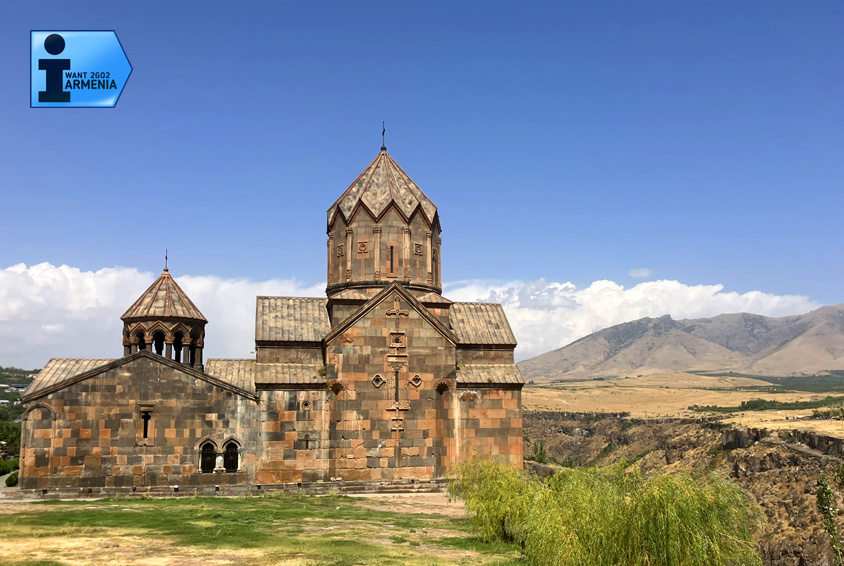
During its period of greatest prosperity, Hovhanavank was one of the largest monasteries in the region, renowned for the sacred relics kept within its walls. Among them were the shroud of Jesus, the nail that pierced His hand, and the right hand of Saint Stephen, which is now housed in Etchmiadzin. The fate of the other two relics remains unknown, yet they - like the monastery itself - attracted countless pilgrims. The monastic complex is located in the village of Ohanavan, 27 km northeast of Etchmiadzin. It includes the Church of Surb Karapet, built in 1221 and richly decorated with bas-reliefs and Christian ornaments, a four-pillar gavit, and the 5th-century basilica of Surb Grigor, notable for its iconostasis - a rare feature in Armenian churches. The ruins of an early Christian temple from the beginning of the 4th century can also be seen here. Hovhanavank has endured numerous trials - earthquakes, wars, and destruction. During the Russo-Persian War, it was shelled, and in 1919 a powerful earthquake destroyed the southern wall of the church and its tall dome placed on a twelve-sided drum. Restoration work took place between 1970 and 1990, during which all lost elements were fully reconstructed. In addition to the churches, the site preserves remnants of fortress walls with towers from the 12th–13th centuries, as well as ancient tombstones. Thanks to its unique architecture and rich history, Hovhanavank is listed among Armenia’s most remarkable monasteries, along with Geghard, Tatev, Sanahin, and Haghpat. Saghmosavank Monastery (Saghmosavan Village, Aragatsotn) R6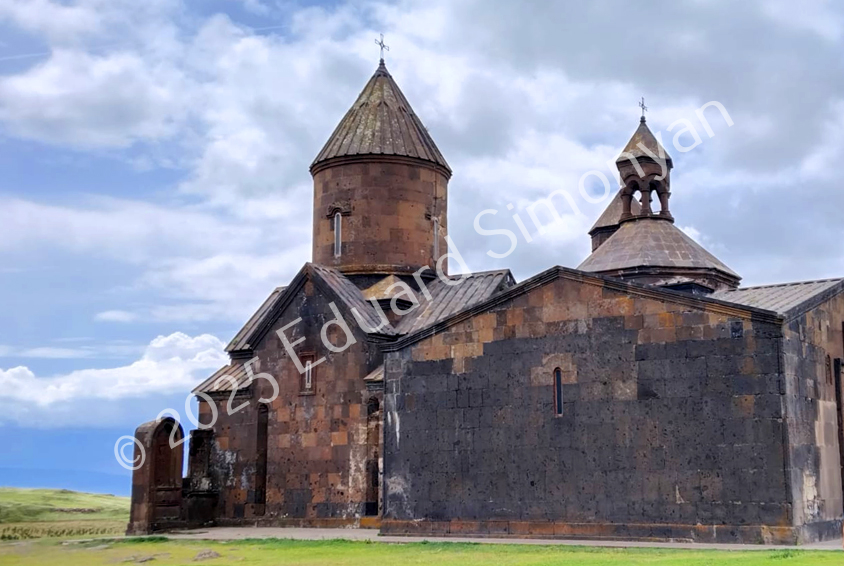
According to tradition, the site for the future Saghmosavank Monastery was chosen by Saint Gregory the Illuminator himself, who founded the first church here and taught priests the psalms. In 1215, Prince Vache Vachutyan built the monastery’s main church - the Church of Zion - which is architecturally similar to the Surb Karapet Church in Hovhanavank. Both sanctuaries are distinguished by their tall domes crowned with crosses. In the Middle Ages, Saghmosavank was one of the wealthiest and most influential monasteries in Armenia. Today, its life has become more modest, but its historical significance and spiritual value remain unchanged. >>>>>>>>>>>>>>>>>>>>>>>>>>>>>>>>>>>>>>>>>>>>>>>>>>>>> Book a tour to Saghmosavank Monastery |
| info@iwant2go2armenia.ru | © 2025 LunTeam |
|---|